In today’s fast-paced online world, people prefer typing short forms instead of complete sentences. Abbreviations like SMH, BRB, GTG, and IDK have become standard ways to express feelings, reactions, or actions quickly.
But what does SMH really mean, and how should it be used in everyday texting?This article is designed to clear all confusion. We’ll explore the meaning of SMH in text, its different uses, real-life examples, social media context, and even similar abbreviations you might encounter.
By the end, you’ll understand exactly what SMH means and how to use it naturally in your messages.
What Does SMH Mean in Text?
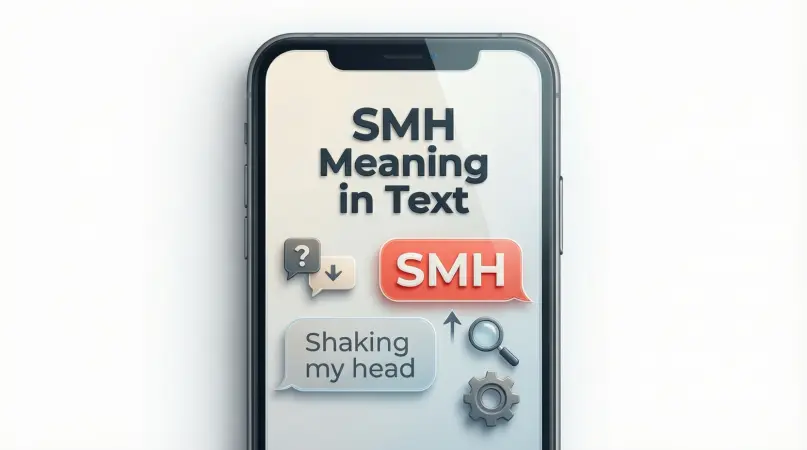
The most common meaning of SMH in texting is “Shaking My Head.”
This phrase is used to express disbelief, disappointment, frustration, or disapproval. Instead of typing a long reaction like, “I can’t believe that happened,” you can simply type SMH to convey the same feeling.
- Shaking My Head conveys emotion non-verbally. It’s similar to rolling your eyes or sighing in real life.
- It’s widely used in casual conversations, social media comments, and text messages.
- SMH can sometimes carry a humorous tone, depending on the context.
In short, when someone types SMH, they are reacting to something that they find ridiculous, annoying, or confusing.
Different Meanings of SMH
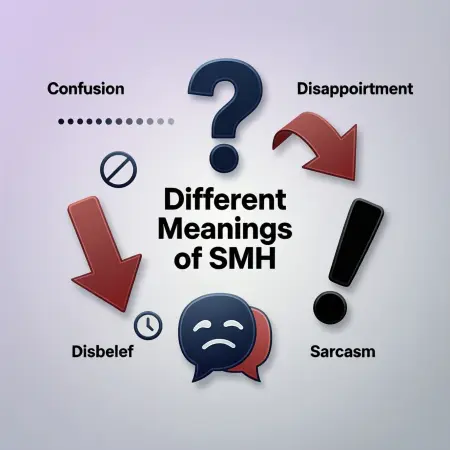
While “Shaking My Head” is the most common meaning, SMH can have other interpretations based on context. Here’s a breakdown:
- Shaking My Head (Most common)
Indicates frustration, disbelief, or disappointment. Example: “You forgot your homework again? SMH.” - So Much Hate
Used when discussing negativity or criticism online. Example: “The comments on that video are full of SMH.” - Send Me Help (Less common)
Sometimes used jokingly in urgent situations. Example: “I’m stuck in this math problem, SMH!” - Stuck My Head (Rare)
A playful or sarcastic way to describe curiosity or surprise. Example: “I saw what happened… SMH.”
It’s important to read the context carefully, as SMH almost always means Shaking My Head, but internet slang can evolve quickly.
How Is SMH Used in Text Messages?
SMH is primarily used in informal digital communication. Here’s how people typically use it:
- Reacting to a Friend’s Mistake:
“You left the keys in the car again? SMH.” - Responding to Funny or Ridiculous News:
“He wore socks with sandals? SMH.” - Expressing Frustration or Disbelief:
“I can’t believe they canceled the event last minute. SMH.”
Casual Usage
- Mostly used among friends, family, and peers.
- Rarely seen in professional or formal emails.
- Common in group chats, text messages, and online comments.
The abbreviation allows users to express feelings quickly and efficiently, which is why it has become popular with teens and social media users.
Examples of SMH in Sentences
Here are 7 natural examples of SMH in real-life texting situations:
- “You forgot your password again? SMH.”
- “I can’t believe she said that in the meeting… SMH.”
- “He bought a new phone and lost it the same day, SMH.”
- “They canceled the concert last minute? SMH.”
- “You tried to cook pasta without water? SMH.”
- “Everyone’s arguing online about something so silly, SMH.”
- “He thought the meeting started at 9 but it was at 8… SMH.”
Notice how SMH is always used to react to situations that are frustrating, disappointing, or ridiculous.
Is SMH Formal or Informal?
SMH is entirely informal. Here’s what to know:
- Professional Setting: Avoid using SMH in emails, business messages, or professional presentations.
- Informal Setting: Perfect for casual texting, chatting with friends, or commenting on social media.
- Tone Awareness: While SMH can show frustration, it can also be humorous depending on context.
In general, if you wouldn’t say “shaking my head” out loud in a formal conversation, don’t use SMH in professional communication.
SMH Meaning on Social Media
SMH is widely used across different social media platforms, sometimes with subtle differences in tone:
- WhatsApp: Quick reactions in group chats or personal messages.
- Snapchat: Replies to stories or snaps that are funny, frustrating, or shocking.
- Instagram: Comments on posts or reels that are surprising or ridiculous.
- TikTok: Responses to funny or outrageous videos, often paired with emojis.
- Facebook Messenger: Used in casual chats to express disbelief or humor.
On social media, the context is key. SMH can be sarcastic, playful, or genuinely frustrated, depending on the message.
Who Commonly Uses SMH?
SMH is popular among a variety of online users:
- Age Groups: Most common among teens and young adults (13–30 years old).
- Casual vs Frequent Users: Frequent social media users and online gamers use it regularly.
- Online Habits: People who text quickly or engage in online communities often prefer abbreviations to save time.
Essentially, SMH has become a staple of digital communication culture, especially among younger generations.
Similar Text Abbreviations Like SMH
If you use SMH, you might also encounter these common text abbreviations:
- BRB (Be Right Back): Temporary pause in conversation.
- GTG (Got To Go): Leaving a chat.
- TTYL (Talk To You Later): Signing off for now.
- IMO (In My Opinion): Expressing personal views.
- IDK (I Don’t Know): Showing uncertainty.
- LOL (Laugh Out Loud): Expressing laughter.
- ROFL (Rolling On the Floor Laughing): Extreme laughter.
These abbreviations serve the same purpose as SMH: faster, concise communication online.
Why Do People Use Short Forms Like SMH?
Short forms like SMH are not just laziness, they are part of digital culture. Benefits include:
- Speed: Typing abbreviations is faster than full sentences.
- Convenience: Ideal for mobile texting or social media comments.
- Expression: Conveys emotion or reaction effectively.
- Trendiness: Using internet slang keeps conversations casual and relatable.
In a world where conversations move fast, abbreviations like SMH help save time and express feelings efficiently.
Common Misunderstandings About SMH
Because SMH can technically have multiple meanings, misunderstandings are common:
- People might confuse Shaking My Head with So Much Hate or other rare meanings.
- The tone can be misinterpreted without context. For example, humor vs frustration.
- Always consider who sent the message and the conversation topic to determine meaning.
A good rule of thumb: default to “Shaking My Head” unless the context clearly indicates otherwise.
FAQs About SMH Meaning in Text
What does SMH mean?
SMH stands for Shaking My Head, used to express disbelief, frustration, or disappointment.
Can SMH be used professionally?
No, it’s informal and best used in casual messaging.
Who commonly uses SMH?
Teens, young adults, and social media users frequently use SMH.
You can reply with humor, empathy, or your own reaction, depending on the situation.
Is SMH negative?
Usually, yes it conveys frustration or disbelief but can be humorous in some contexts.
Can SMH be used on all social media platforms?
Yes, it’s common on WhatsApp, Instagram, TikTok, Snapchat, and Facebook Messenger.
Are there similar abbreviations to SMH?
Yes, examples include LOL, BRB, TTYL, IDK, and GTG.
Does SMH have other meanings?
Rarely, it can mean So Much Hate or Send Me Help, but the most common meaning is Shaking My Head.
Conclusion
SMH is one of the most popular text abbreviations used online today. It’s simple, expressive, and perfect for casual conversations. While it primarily means “Shaking My Head”, it’s important to understand the context to avoid misunderstandings.
Next time you see SMH in a text or comment, you’ll know exactly what it means and maybe even smile while shaking your own head.