Texting and online chats have created their own fast-moving language. People shorten words, skip grammar rules, and use abbreviations to save time and express emotions quickly. While some short forms like LOL or BRB are easy to understand, others like ISTG can be confusing, especially if you’re seeing them for the first time or hearing different meanings from different people.
In this detailed guide, we’ll break down istg meaning in text in the simplest way possible. You’ll learn what ISTG usually means, how people use it in real conversations, where it’s commonly seen, and how to understand it based on context.
By the end of this article, you’ll feel confident reading, understanding, and even using ISTG correctly in your own messages.
What Does ISTG Mean in Text?
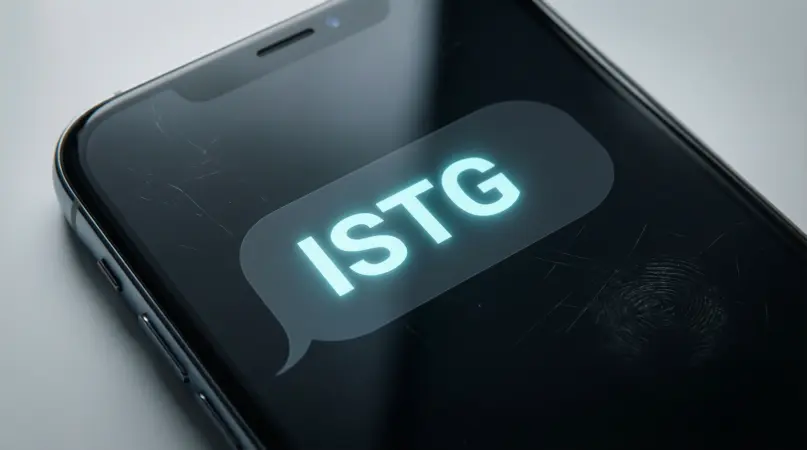
The most common and widely accepted istg meaning in text is:
ISTG = I Swear To God
When someone uses ISTG in a text message or online chat, they are usually trying to emphasize that they are being honest, serious, or extremely emotional about what they’re saying. It’s often used to show frustration, disbelief, promise, or strong feelings.
Think of ISTG as a way to add emotional weight to a message. Instead of writing a full sentence like “I swear to God, this is true,” people shorten it to ISTG to keep things quick and casual.
Simple explanation:
- ISTG is a strong expression
- It shows seriousness or strong emotion
- It’s commonly used in informal conversations
Different Meanings of ISTG

Although I Swear To God is the most popular meaning, ISTG can have slightly different interpretations depending on context, tone, and conversation. Below are the possible meanings you might come across.
I Swear To God (Most Common Meaning)
This is the standard and most widely used meaning.
People use it to:
- Emphasize honesty
- Express frustration
- Show disbelief
- Make a strong promise
Example context:
“I didn’t eat your snacks, ISTG.”
I Seriously Think God… (Rare and Context-Based)
In some rare situations, ISTG can be interpreted as “I seriously think God…”, but this meaning is uncommon and usually only makes sense in religious or philosophical discussions.
This usage is:
- Very rare
- Context-dependent
- Not common in casual texting
Emotional Emphasis Without Religious Intent
Many users type ISTG without thinking about its religious meaning. For them, it’s simply a way to:
- Add drama
- Show strong emotion
- Emphasize a statement
In modern texting culture, ISTG often functions more as an emotional intensifier than a literal religious phrase.
How Is ISTG Used in Text Messages?
Understanding istg meaning in text also means understanding how people actually use it in real-life conversations. ISTG is mostly used in casual, informal messaging between people who are comfortable with each other.
Common situations where ISTG is used:
- Chatting with friends
- Group chats
- Social media comments
- Gaming chats
- Casual DMs
Typical emotions behind ISTG:
- Annoyance
- Shock
- Excitement
- Anger
- Seriousness
Tone matters
ISTG can sound:
- Funny
- Serious
- Angry
- Dramatic
The meaning depends heavily on the rest of the message.
Examples of ISTG in Sentences
To fully understand istg meaning in text, let’s look at some natural, real-life examples. These show how ISTG fits into everyday conversations.
- “ISTG if this app crashes one more time, I’m deleting it.”
(Shows frustration) - “I didn’t touch your phone, ISTG.”
(Emphasizing honesty) - “ISTG this movie made me cry so hard.”
(Strong emotional reaction) - “If you’re late again, ISTG I’m leaving.”
(Warning or threat, often playful) - “ISTG you always know how to make me laugh.”
(Positive emotion) - “That test was so hard, ISTG.”
(Stress or disbelief) - “ISTG I saw him at the mall yesterday.”
(Trying to convince someone)
Is ISTG Formal or Informal?
ISTG is strictly informal.
- Professional emails
- Work messages
- Academic writing
- Business communication
Where ISTG is appropriate:
- Text messages with friends
- Casual online chats
- Social media conversations
Where ISTG should be avoided:
- Emails to your boss
- Job applications
- School assignments
- Official announcements
In formal situations, it’s better to use full sentences like:
- “I assure you”
- “I promise”
- “I am being completely honest”
ISTG Meaning on Social Media
Social media platforms have made abbreviations like ISTG even more popular. Let’s look at how istg meaning in text appears across different platforms.
ISTG on WhatsApp
On WhatsApp, ISTG is commonly used in:
- Personal chats
- Group conversations
- Family chats (depending on comfort level)
It usually shows emotion or seriousness.
ISTG on Snapchat
On Snapchat, ISTG is often:
- Casual
- Emotional
- Used with stories or captions
Example:
“ISTG today was exhausting.”
ISTG on Instagram
On Instagram, ISTG appears in:
- Comments
- Captions
- DMs
ISTG on TikTok
On TikTok, ISTG is frequently used in:
- Video captions
- Comments
- Relatable content
Creators use it to exaggerate emotions or reactions.
ISTG on Facebook Messenger
On Facebook Messenger, ISTG is used similarly to texting:
- Casual conversations
- Friend chats
- Group messages
Who Commonly Uses ISTG?
Understanding who uses ISTG can help you decide when it’s appropriate for you to use it.
Age Groups
- Teens: Very common
- Young adults: Common
- Older adults: Less common, but increasing
Communication Style
- Text frequently
- Are active on social media
- Prefer casual communication
Online Habits
You’ll see ISTG more often among:
- Online communities
- Gamers
- Social media users
Similar Text Abbreviations Like ISTG
There are many abbreviations similar to ISTG that express emotion, honesty, or emphasis. Here are some popular ones:
GTG – Got To Go
Used when leaving a conversation.
BRB – Be Right Back
Used when temporarily stepping away.
TTYL – Talk To You Later
Used to end a conversation politely.
IMO – In My Opinion
Used to share personal thoughts.
IDK – I Don’t Know
Used to express uncertainty.
SMH – Shaking My Head
Used to show disappointment or disbelief.
OMG – Oh My God
Used to express surprise or excitement.
Why Do People Use Short Forms Like ISTG?
Text abbreviations exist for a reason. Here’s why people love using them.
Speed and Convenience
Typing four letters is faster than typing a full sentence.
Emotional Expression
Short forms can express feelings quickly and effectively.
Digital Culture
Abbreviations are part of modern online communication.
Casual Tone
They make conversations feel relaxed and friendly.
Common Misunderstandings About ISTG
Thinking It’s Always Religious
Many people assume ISTG is always religious, but most users don’t mean it that way.
Confusing Tone
ISTG can sound serious or joking depending on context.
Using It in Formal Settings
Some people mistakenly use ISTG in professional messages, which can seem inappropriate.
How to Avoid Confusion
- Read the full message
- Consider the relationship with the sender
- Look at the emotional tone
FAQs About ISTG Meaning in Text
What does ISTG mean in text messages?
ISTG usually means I Swear To God and is used to emphasize honesty or strong emotion.
Is ISTG a bad word?
No, ISTG is not considered a bad word, but it may be sensitive for some people due to religious references.
Can I use ISTG with friends?
Yes, ISTG is commonly used among friends in casual conversations.
Is ISTG okay for social media?
Yes, it’s widely used on platforms like Instagram, TikTok, and Snapchat.
Should I use ISTG at work?
No, ISTG is informal and should be avoided in professional settings.
Does ISTG always mean the same thing?
Most of the time, yes, but context can slightly change how it’s interpreted.
Is ISTG used worldwide?
Yes, English-speaking users around the world use ISTG in texting and online chats.
Can ISTG be used jokingly?
Absolutely. Many people use ISTG humorously or dramatically.
Conclusion
Understanding istg meaning in text is important in today’s fast-paced digital world. While it may look confusing at first, ISTG is simply a casual abbreviation that usually means I Swear To God. People use it to express honesty, frustration, excitement, or strong emotions in informal conversations.
The key to understanding ISTG is context. Pay attention to the message, the tone, and the platform where it’s used.