In today’s fast-paced digital world, texting has become a major way of communicating, especially among friends and younger generations. People often use abbreviations and acronyms to save time and make messages quicker to type.
One common abbreviation you might see in texts is “HBU.” But what does it really mean? Understanding such abbreviations is important to avoid confusion and respond appropriately.
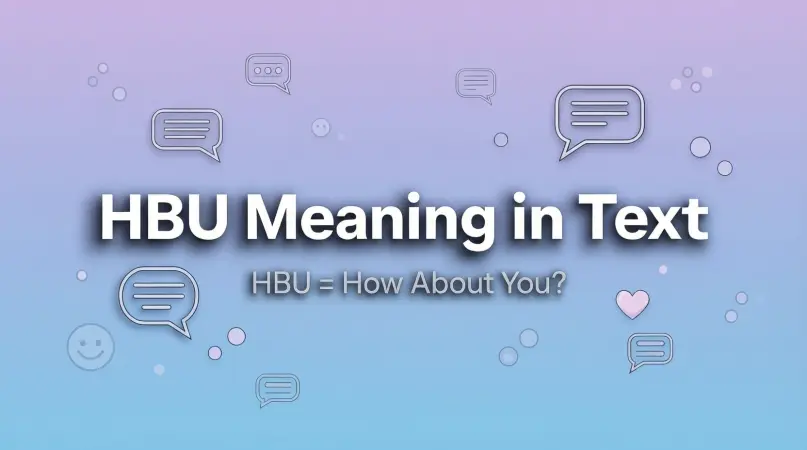
HBU stands for “How about you?” and is usually used in conversations to return a question or ask someone about their opinion, feelings, or situation. For example, if someone says, “I had a great weekend, HBU?” they are asking about your weekend in return.
What Does hbu Mean in Text?
The abbreviation hbu stands for “how about you?” in text messaging and online chats. It is a casual, informal way of asking someone about their opinion, feelings, or situation after sharing your own.
For example, if someone texts:
“I just finished my homework. Hbu?”
It simply means:
“I just finished my homework. How about you?”
This abbreviation is mainly used to keep conversations flowing naturally without typing the full sentence. It’s short, friendly, and perfect for casual chats on phones or computers.
Key points about hbu:
- Informal and casual
- Mostly used in texting or chatting apps
- Helps in making conversations quicker and smoother
- Often paired with emojis to express emotions
Different Meanings of hbu
While “how about you?” is the most common meaning, hbu can occasionally be interpreted differently depending on the context. Let’s explore some possibilities:
- How ‘bout you?
A slight variation of “how about you?” Often used in spoken or playful text styles. Example:
“I’m doing great today! How ‘bout you? 😄” - Hit Back Up (less common)
Sometimes in gaming or social media, hbu may refer to “hit back up,” suggesting reaching out to someone again. Example:
“I haven’t talked to Jake in a while, maybe I should hbu later.” - Have a Blast, U (rare and slangy)
A playful, informal use in very casual texts. Rare and not widely recognized. Example:
“Going to the concert tonight, hbu?”
In general, if you see hbu, you can safely assume it means “how about you?” unless the conversation context clearly indicates otherwise.
How Is hbu Used in Text Messages?
hbu is widely used in informal messaging situations, especially among friends, teens, and online users. Here’s how it’s commonly used:
- Conversational Flow
It helps keep conversations active without needing long sentences.
Example:
“I’m at the cafe grabbing coffee, hbu?” - Casual Check-ins
It’s often used to ask about someone’s day, feelings, or opinion casually.
Example:
“Finished my workout. Hbu?” - In Replies
After someone shares an update, hbu is an easy way to return the question politely.
Example:
“I’m feeling tired today. Hbu?”
Who commonly uses it?
- Teenagers and young adults in casual texting
- Social media users in comments and DMs
- People who frequently chat on WhatsApp, Snapchat, and Instagram
Examples of hbu in Sentences
Here are 7 real-life examples of how hbu is used naturally in conversations:
- Friend Chat:
“I’m watching a movie at home. Hbu?” - Work Colleague (Informal Chat):
“Finished the project early! Hbu?” - Social Media DM:
“Just tried the new café downtown. Hbu?” - Group Chat:
“I got tickets for the concert. Hbu?” - Texting a Crush:
“I’m having pizza for lunch 😋 Hbu?” - Casual Check-in:
“Feeling sleepy today 😴 Hbu?” - After Sharing Plans:
“I’m going hiking this weekend. Hbu?”
These examples show that hbu is versatile, short, and friendly.
Is hbu Formal or Informal?
hbu is informal. It is not recommended for professional or formal communication like emails to your boss, official reports, or client messages. Using hbu in formal contexts may appear unprofessional or overly casual.
- Informal situations:
- Texting friends or family
- Group chats
- Social media DMs
- Texting friends or family
- Formal situations:
- Professional emails or work messages
- Academic communication
- Official online forums
- Professional emails or work messages
Instead of hbu, in formal contexts, you can use:
“How are you?” or “What about you?”
hbu Meaning on Social Media
The usage of hbu can slightly differ across platforms:
- WhatsApp:
Common in daily conversations, often paired with emojis. Example:
“Just finished lunch 🍕 hbu?” - Snapchat:
Casual check-ins or chat replies, sometimes in stories.
“Going to the beach 🌊 hbu?” - Instagram:
Used in DMs or comment threads for quick responses.
“I love your new post 😍 hbu?” - TikTok:
Less common in videos, more in comment replies.
“That trend is fun 😂 hbu?” - Facebook Messenger:
Frequently used in friendly chats.
“Had a long day at work 😓 hbu?”
Key tip: On social media, context is crucial. The tone, relationship, and conversation style can slightly shift how hbu is interpreted.
Who Commonly Uses hbu?
hbu is most popular among:
- Age groups: Teenagers (13–19) and young adults (20–30)
- Frequent chatters: People who use texting apps daily
- Casual users: Anyone who prefers fast, informal communication
Digital habits:
- Active on Instagram, TikTok, Snapchat, and WhatsApp
- Comfortable with emojis, abbreviations, and slang
- Prefer typing short forms to save time
Similar Text Abbreviations Like hbu
Here are some similar text abbreviations that are widely used:
- GTG: “Got to go” – used when leaving a chat
- BRB: “Be right back” – temporarily leaving conversation
- TTYL: “Talk to you later” – ending a conversation politely
- IMO / IMHO: “In my opinion / In my humble opinion” – sharing personal views
- IDK: “I don’t know” – expressing uncertainty
- SMH: “Shaking my head” – expressing disbelief or frustration
These abbreviations, like hbu, are shortcuts for casual conversations and make texting faster and more expressive.
Why Do People Use Short Forms Like hbu?
There are several reasons why abbreviations like hbu are widely used:
- Speed: Typing short forms is faster than writing full sentences.
- Convenience: Easy to send quick replies in busy chats.
- Digital Culture: Abbreviations are trendy among young people and online communities.
- Casual Tone: Makes conversations feel light, friendly, and approachable.
- Space-Saving: Helpful in platforms with character limits, like Twitter.
In short, hbu is part of modern digital communication culture, enabling effortless chatting.
Common Misunderstandings About hbu
Sometimes, hbu can be misunderstood:
- Multiple meanings: People may confuse it with rare slang like “hit back up”
- Context matters: Without context, it may be unclear if the user is asking a question or making a statement
- Generational gap: Older users or people new to texting may not know hbu, causing confusion
Tip: Always look at surrounding messages, tone, and relationship with the sender to interpret hbu correctly.
FAQs About hbu Meaning in Text
1. What does hbu mean in texting?
It stands for “how about you?”, used to ask someone about their opinion or situation.
2. Is hbu formal?
No, it is informal and should be used in casual conversations, not professional emails.
3. Can hbu mean anything else?
Yes, rarely it can mean “hit back up” or “have a blast, u,” but “how about you?” is the most common meaning.
4. How do you respond to hbu?
Reply with your own situation or opinion. Example:
“I’m good, thanks! Hbu?”
5. Is hbu used on social media?
Yes, especially on WhatsApp, Instagram, Snapchat, TikTok, and Messenger.
6. Who uses hbu the most?
Teenagers, young adults, and frequent online chatters.
7. Is hbu understood globally?
Mostly in English-speaking regions and online communities familiar with texting slang.
8. What are similar abbreviations to hbu?
GTG, BRB, TTYL, IMO, IDK, SMH, and others used in casual chats.
Conclusion
To sum up, hbu meaning in text is “how about you?” a simple, casual way to keep conversations flowing. It’s widely used among teens and young adults, especially on messaging apps and social media platforms.