Have you ever been chatting online, enjoying a casual conversation, when suddenly someone drops a short, confusing phrase like “asl?” into the chat? You pause, reread the message, and wonder what on earth it means. You’re not alone.
Many people experience this exact moment of confusion when they first encounter abbreviations like ASL in text messages.
In today’s digital world, texting, instant messaging apps, and social media platforms have completely changed how we communicate. To save time and type faster, people often use short forms and slang.
What Does ASL Mean in Text?
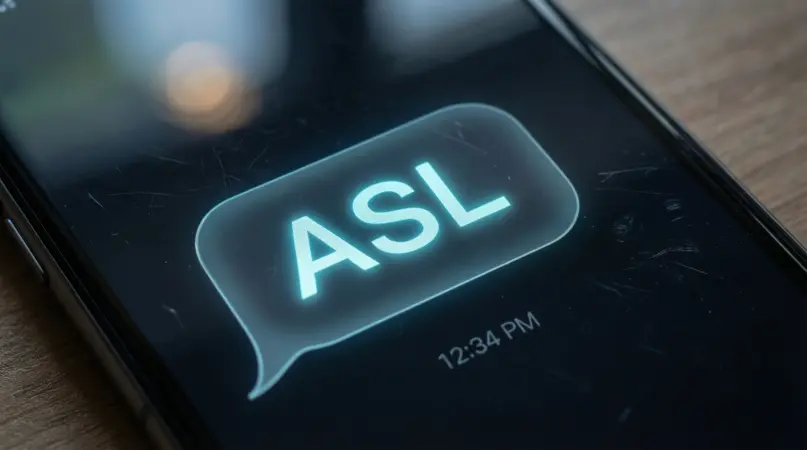
The most common asl meaning in text is:
ASL = Age, Sex, Location
This abbreviation is usually used as a question: “asl?”
People ask “asl?” to quickly learn basic information about the person they are chatting with. It became popular in early online chat rooms, forums, and instant messaging platforms, where users wanted to know who they were talking to.
In simple terms:
- A = Age
- S = Sex (or gender)
- L = Location
So when someone types “asl?”, they are asking:
“How old are you, what gender are you, and where are you from?”
This is the most widely recognized and commonly used meaning of ASL in text conversations.
Different Meanings of ASL
Although Age, Sex, Location is the most common meaning, ASL can stand for other things depending on the context. Understanding these different meanings helps avoid confusion.
ASL = Age, Sex, Location (Most Common)
This meaning is mainly used in:
- Online chats
- Dating apps
- Chat rooms
- Social media DMs
It’s informal and usually used between strangers or new online connections.
ASL = American Sign Language
In educational, professional, or disability-related discussions, ASL often refers to American Sign Language.
For example:
- “I’m learning ASL to communicate better with deaf students.”
- “ASL is widely used in the United States and Canada.”
This meaning is very common in schools, universities, and professional settings.
ASL = As Hell (Slang Usage)
In casual slang, some people use ASL to mean “as hell”, though this is less common and highly informal.
For example:
- “That movie was boring asl.”
- “I’m tired asl today.”
This version is mostly seen among teens or on social media platforms.
ASL = Age, Status, Location (Rare Variation)
In some rare cases, people may slightly change the meaning of ASL to:
- Age
- Status (relationship status)
- Location
This is uncommon but can appear in dating-related conversations.
How Is ASL Used in Text Messages?
Understanding asl meaning in text becomes much easier when you see how it’s used in real conversations.
ASL is mostly used in casual and informal texting situations. You’ll often see it at the beginning of a conversation, especially when two people don’t know much about each other.
Common Situations Where ASL Is Used
- When chatting with someone new online
- In anonymous chat rooms
- On dating apps
- In social media direct messages
How People Usually Type It
- “asl?”
- “ASL?”
- “asl pls”
It’s short, quick, and meant to get basic information without typing a long question.
Who Uses It Most?
- Teens and young adults
- Online gamers
- Social media users
- People chatting with strangers
Examples of ASL in Sentences
Here are 7 natural, real-life examples showing different contexts of asl meaning in text:
- “Hey, we’ve been chatting for a while. asl?”
- “Before we continue, can I ask your asl?”
- “He asked me my asl right after saying hi.”
- “She replied with 22/F/NY when I asked asl.”
- “I usually ignore messages that start with asl.”
- “Back in chat rooms, everyone used to ask asl.”
- “On dating apps, asl is still pretty common.”
These examples show how ASL naturally fits into online conversations.
Is ASL Formal or Informal?
ASL is considered informal in most contexts.
When ASL Is Appropriate
- Casual chats with friends
- Online conversations with strangers
- Social media messaging
- Gaming chats
When ASL Should Be Avoided
- Professional emails
- Workplace communication
- Academic writing
- Formal interviews
Using “asl?” in a professional setting can appear unprofessional or inappropriate. Always consider your audience before using abbreviations like ASL.
ASL Meaning on Social Media
The asl meaning in text can slightly change depending on the platform and context. Let’s break it down by popular social media apps.
ASL Meaning on WhatsApp
On WhatsApp, ASL usually means Age, Sex, Location, especially in:
- Group chats
- Conversations with new contacts
However, some people may use ASL to mean American Sign Language in educational groups.
ASL Meaning on Snapchat
On Snapchat, ASL is often used:
- In quick chats
- When adding new friends
It almost always means Age, Sex, Location here.
ASL Meaning on Instagram
On Instagram DMs:
- ASL is commonly used when strangers message each other
- Influencers may receive “asl?” from new followers
Context matters—sometimes it may feel intrusive.
ASL Meaning on TikTok
On TikTok:
- ASL often refers to American Sign Language
- Many creators post ASL educational content
In comments, context tells you which meaning is intended.
ASL Meaning on Facebook Messenger
On Facebook Messenger:
- ASL can mean Age, Sex, Location in casual chats
- Older users may recognize it from early internet days
Who Commonly Uses ASL?
Understanding who uses ASL helps you interpret its tone and intent.
Age Groups
- Teens (13–19): Frequent users in casual chats
- Young adults (20–30): Common in dating apps and DMs
- Older users (30+): May recognize it from early chat rooms
Casual vs Frequent Users
- Casual internet users may rarely use ASL
- Frequent online chatters and gamers use it more often
Online Communication Habits
People who spend a lot of time:
- Chatting online
- Gaming
- Using dating apps
are more likely to use or understand ASL.
Similar Text Abbreviations Like ASL
Popular Similar Abbreviations
- GTG – Got to go
- BRB – Be right back
- TTYL – Talk to you later
- IMO – In my opinion
- IDK – I don’t know
- FYI – For your information
- LOL – Laugh out loud
Like ASL, these short forms save time and make conversations faster.
Why Do People Use Short Forms Like ASL?
Short forms like ASL exist because of how digital communication has evolved.
Key Benefits
- Speed: Faster typing
- Convenience: Less effort
- Efficiency: Quick exchanges
- Digital Culture: Internet slang trends
In fast-paced online conversations, abbreviations feel natural and practical.
Common Misunderstandings About ASL
ASL can be confusing because it has multiple meanings.
Why Confusion Happens
- Same abbreviation, different meanings
- Context is ignored
- New users aren’t familiar with internet slang
How to Identify the Correct Meaning
- Look at the conversation topic
- Check the platform
- Consider who is speaking
For example:
- Education topic → American Sign Language
- Chat with stranger → Age, Sex, Location
Context always matters.
FAQs About ASL Meaning in Text
What does ASL stand for in texting?
ASL usually stands for Age, Sex, Location in text messages.
Is ASL still used today?
Yes, ASL is still used, especially in casual online chats and dating apps.
Is it rude to ask someone ASL?
It depends on context. Some people find it intrusive, while others see it as normal.
Can ASL mean American Sign Language?
Yes, in educational or professional contexts, ASL means American Sign Language.
Is ASL safe to answer?
Only share information you’re comfortable with, especially with strangers.
Do teens use ASL?
Yes, teens and young adults commonly use ASL in casual chats.
Is ASL used in professional communication?
No, ASL is informal and should be avoided professionally.
How do I respond to “asl?”
You can reply with your age, gender, and location or choose not to respond.
Conclusion
Understanding the asl meaning in text helps you navigate online conversations with confidence. While ASL most commonly stands for Age, Sex, Location, it can also mean American Sign Language or even “as hell” depending on the context.
ASL is informal, widely used in casual chats, and deeply rooted in internet culture. Before using or responding to it, always consider your comfort level and the situation.